

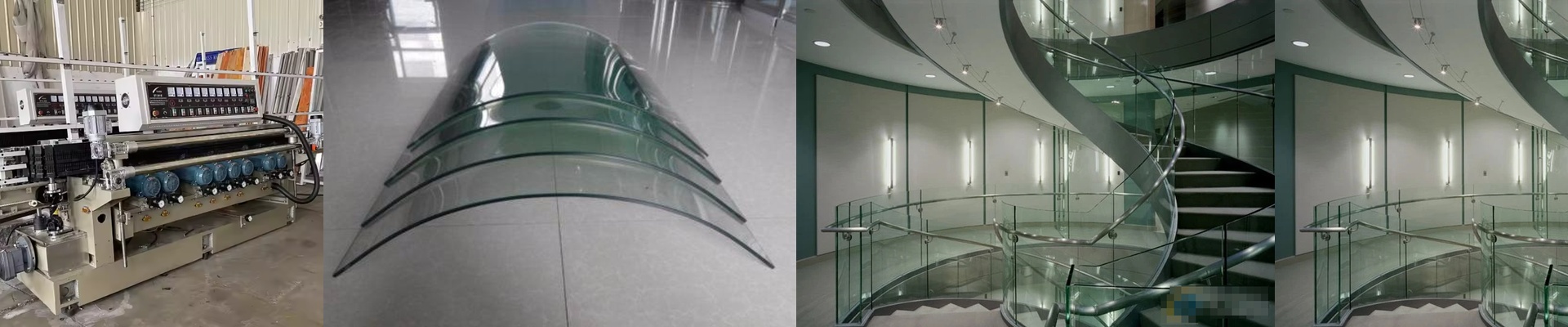
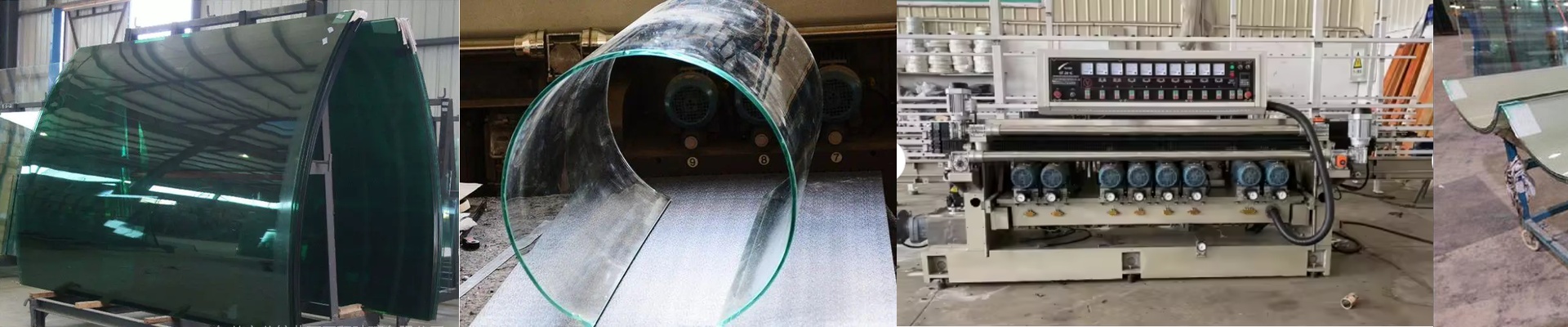
On the glass line, heat isn’t just heat. It’s cycle time, it’s optical quality, and it’s the thin line between a pane that ships and one that gets scrapped. When the heating profile starts to drift, you feel it right away—optical distortion in tempered glass, edge wave on bent units, weak adhesion in lamination, or IG seals that crawl and stall the whole bench. Halogen infrared lamps were built for one job: hit a tight thermal window and hold it, shift after shift. We run glass plants, and we design heating systems for them. Halogen IR isn’t a hunch. It’s a repeatable way to put controlled energy exactly where the glass needs it, exactly when it needs it.
The technical heart: halogen infrared, built around glass
Halogen infrared lamps deliver short-wave radiation that penetrates the glass surface and dumps energy straight into the material. That’s not the same as heating with hot air. Convection heating has to fight film temperatures, longer ramps, and a heavier energy draw. In production, the value comes down to three behaviors you can measure:
- **Stable heat flux across the target.**A well-set halogen IR array keeps the heat even, which cuts down hot and cold spots. In the real world, that means fewer stress peaks that can show up later as roll wave, bow, or optical distortion after forming and cooling.
- **Fast response.**The filament comes up to operating temperature in seconds, so the lamp can track setpoints quickly through ramps and holds. That tightens cycle time on tempering and bending, and gives you cleaner control during lamination and coating drying.
- **Directional delivery.**Infrared energy travels in a line, not in all directions. That lets you focus the heat onto the glass surface with far less wasted energy into fixtures and air. The payoff is predictable heating, lower energy per part, and a cleaner thermal footprint on the line. Halogen infrared lamps for glass usually come as complete modules—lamp, reflector, mounting hardware, and terminals—so you can treat each one as a defined heating zone. Industrial configurations are built for line voltages and continuous duty, with quartz envelopes chosen for high-temperature stability and resistance to thermal shock.
Why it fits: from tempering to lamination, control where it counts
Glass processing is a chain of thermal decisions. Halogen IR shines in the spots where timing, temperature, and uniformity directly drive yield.
Tempering and bending lines
In tempering, the heating stage has to bring the glass to forming temperature fast and even, so the quench can do its job. Uneven heating creates uneven stress, and uneven stress creates breakage and optical defects. Directional IR cuts the soak window and tightens the temperature spread across the pane. On bending, that same fast, even heat improves shape repeatability—especially on complex curves where edge and center temperatures have to track closely. What you get:
- Shorter heating ramps, more throughput per shift
- More consistent stress distribution, fewer rejects from optical distortion
- Tighter local control on heating zones for complex bends
Lamination (EVA/SGP/PVB)
Lamination comes down to getting the interlayer to flow and bond without scorching the glass surface. If the heat arrives too slowly, the interlayer sits in a wide temperature window too long and can degrade. If the heat is uneven, you get bubbles, voids, and weak edges. Halogen IR gives you rapid, uniform surface heating that supports a clean thermal profile, then the press does the bonding. What you get:
- Better edge adhesion and fewer voids
- Faster cycle time on the heating step
- Less variation from batch to batch
Coating and insulating glass
With low-e and other coatings, drying and curing have to be controlled enough to protect film integrity. Halogen IR can be set up in zoned heating to match the coating pattern and avoid overheating edges. For insulating glass, a fast, controlled heat pulse helps you hit consistent seal integrity without dumping excess heat into the spacer and frame, where it can cause secondary seal problems. What you get:
- More repeatable curing across different coating types
- Consistent seal profiles for IG, fewer callbacks
- Lower energy per unit because the heat goes where it matters
The shop-floor details: installation, compatibility, and what it takes to run
Halogen IR lamps are straightforward, but they pay you back only if you treat the details like they matter.
- **Mounting distance and angle.**IR intensity drops off fast—inverse square law. Keep the lamp-to-glass distance within the module’s recommended range, and set the angle to match the target zone. Too close and you risk hot spots; too far and you lose speed and uniformity.
- **Reflector condition.**The reflector is part of the optical system. Keep it clean and aligned. A dirty reflector scatters energy and flattens the profile, and that shows up as subtle quality drift.
- **Thermal management.**These modules run hot, and the surrounding fixtures can get hot too. Leave room for airflow, and use cables and connectors rated for the temperature environment.
- **Electrical fit.**Match voltage, current, and terminal type to the line. If you’re swapping in a replacement, confirm the mounting footprint and wiring so the lamp fits without field mods that can throw alignment off.
- **Temperature measurement.**Use a calibrated pyrometer or a fixed thermocouple setup to verify actual glass temperature under the lamp. If the sensor isn’t placed right, the controller is just reading the lamp or the air. One practical reality: halogen IR modules are high-output heaters, and like any high-temperature source, they need planned maintenance—reflector cleaning, terminal checks, and periodic inspection of the envelope. Schedule it, and the lamps run without surprises. If your plant is chasing stable cycles, predictable quality, and lower energy per part, the heating method has to match the physics of the process. Halogen infrared gives you uniform heat, fast response, and directional control—the three levers that actually move yield and uptime in glass processing.