

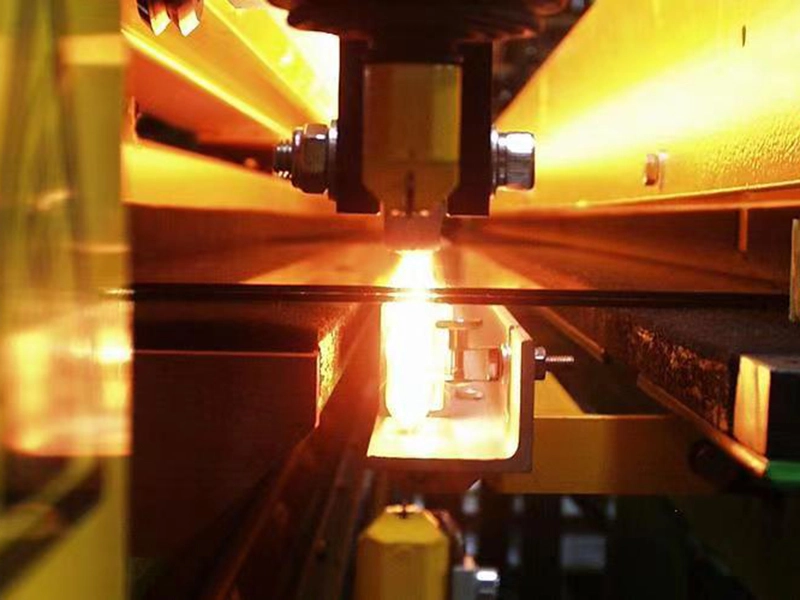
Out on the cold end of the line, the coating dryer isn’t just evaporating solvents. It’s setting the surface finish and dictating the rhythm of the shift. If the thermal field wanders, you’re staring down uneven curing, pinholes, and glass that should have shipped ending up as scrap. We built our cold-end coating dryer to live with that reality, not fight it. What actually matters under the hood We run near-infrared (NIR) emitters in a modular array, tuned for fast, directional heat with minimal convection. That gives you a tight thermal envelope: surface temperature hits target in seconds, not minutes, and the profile stays flat across the glass width. Power density is matched to line speed, voltage is picked for your plant distribution, and the mounting geometry drops into standard cold-end frames. Quartz windows keep the elements shielded from dust and condensate, and emissivity stays stable through long runs. The payoff is repeatable drying with tighter tolerances and less batch-to-batch drift. Why it fits the way the line moves Coating and drying have to keep up with tempering, bending, and lamination—without becoming the bottleneck. Our NIR modules ramp fast, hold steady, and cool down quickly, so changeovers don’t chew into uptime. Energy use drops because the heat goes where it’s needed, not into the air around it. That shows up as yield: fewer re-coats, fewer optical defects, and consistent adhesion on EVA/SGP/PVB assemblies. On insulating glass sealing lines, the dryer supports consistent primer and edge seal activation, cutting rejects that come from uneven surface energy. What you need to get right on the floor Installation is straightforward, but integration is where the details matter—clearances and airflow included. The emitter array needs a clean, dry zone to avoid fouling early, and reflector alignment has to be checked during commissioning. Plan for routine checks on lamp ends, quartz integrity, and thermal uniformity mapping. If you’re running thick glass at low speed, peak power demand climbs—we size the system accordingly. This isn’t plug-and-play thinking. It’s plant-floor engineering, and it pays off when you treat it that way.