


Making Your Outdoor Heaters Actually Smart
Heating a patio isn’t as simple as just plugging in something with a lot of power. When we build waterproof electric heaters that play nice with smart home setups, the real challenge is the “handshake” between the heavy-duty power needed for heat and the delicate electronics that handle the smart controls.
How the guts work
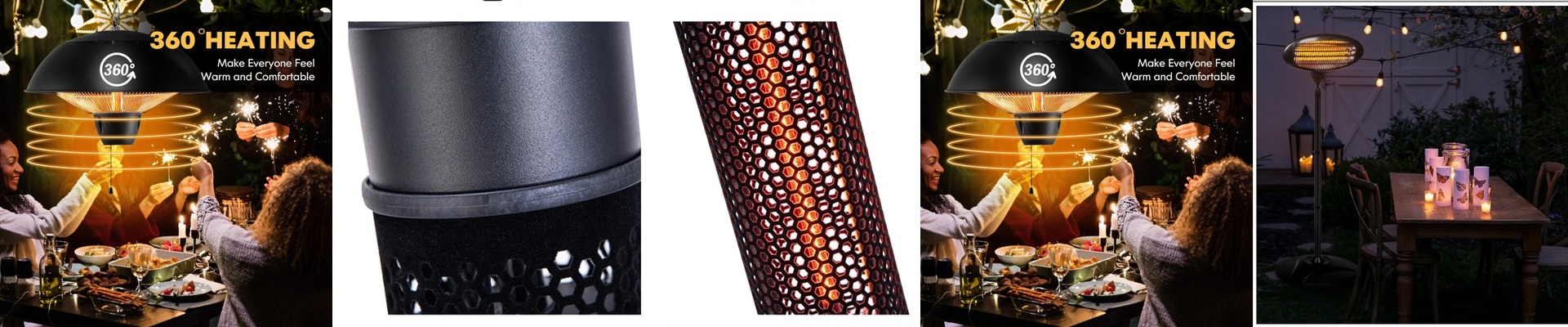
We use shortwave infrared emitters. Instead of trying to warm up the chilly night air—which is basically a losing battle—these beam heat directly onto you and your guests. It feels like standing in the sun. To make this “smart,” we put a heavy-duty relay (or an SSR) between the power plug and the heating element. Think of it as a digital light switch. A tiny 5V or 12V signal from your smart hub flips that switch, letting the full 110V or 220V flow through to the lamp. And because it’s outdoors, we don’t mess around with the housing. We use IPX4 or IP65 rated seals and tight gaskets around the wires. This keeps rain from sneaking in and frying the control board.
No more waiting around
Nobody wants to sit in the cold for ten minutes waiting for a heater to “warm up.” That’s why we lean on Zigbee or Matter. They’re faster and more reliable than standard Wi-Fi for this kind of thing. You tap a button on your phone, the signal hits the gateway, the relay clicks, and you’re warm in seconds. It’s almost instant.
The honest truth about the engineering
Here is the thing: adding smart controls to high-wattage gear adds another part that could potentially break. Relays can wear out if they’re clicked on and off thousands of times. Then there’s the “inrush current.” When a heater first kicks on, there’s a massive surge of electricity. If you use a cheap, undersized relay, those internal contacts can actually weld themselves shut. Your heater stays “On” forever, and you’ve got a problem. To stop that from happening, we just use oversized relays. It’s a simple fix that keeps everything running smoothly.