
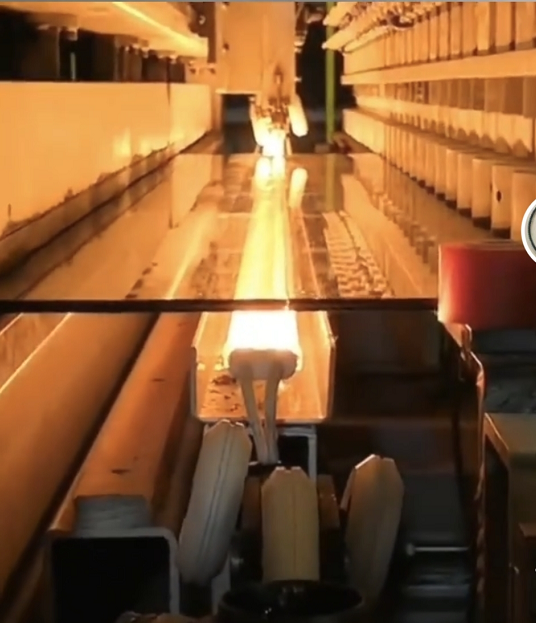
On the line, minutes are money. When the tempering furnace or lamination press is waiting on heat, glass sits idle, the schedule tightens, and rejects start showing up from uneven temperatures. Infrared heating for glass finishing was built to cut that drag. What matters, technically We run short-wave quartz infrared emitters tuned to the absorption band of glass and coatings, so energy goes straight in with minimal convection. Power density sits at 30–60 kW/m², and the fast ramp shortens cycle time. You get a tight thermal profile across the sheet, which lowers thermal stress and the edge effects that break glass during tempering and bending. Emissivity control and reflector geometry keep the heat on the product, not on the frame. Why it works in these processes In the high-power finishing zones, infrared gives you quicker heat-up, tighter uniformity, and lower kWh/m². In tempering, it gets the glass to the quench-ready phase faster, so you can bump line speed without pushing gas or electric convection to its limit. In lamination and coating drying, it dries EVA, SGP, PVB, and functional films more evenly, which cuts voids and haze. Energy drops because the power goes into the glass, not into heating air. I’ve seen plants cut finishing energy by 20–30% while holding yield, and on some lines, they push output higher. Here are the practical details Infrared emitters are picky about spacing and line-of-sight. Mounting tolerances and keeping reflectors clean make a real difference. Existing ovens and presses often need minor tweaks to align the hot zone and keep safe clearances. Commissioning is quick once you dial in power density and scan speed for your glass thickness and coating stack. When it’s matched right, the module drops in as a direct replacement for older heaters, and maintenance intervals stretch out—no contact, no blowers, and fewer moving parts.