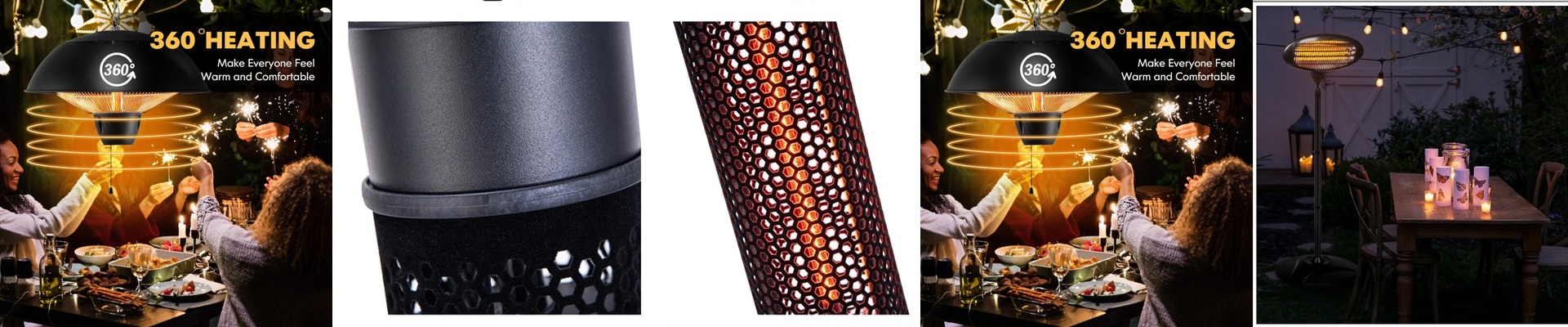



Let’s be honest: bathrooms are a nightmare for heaters. Between the thick steam and the occasional stray splash of water, most heating elements just give up. They rust, they short out, and they die. We got tired of seeing that happen, so we built our infrared line to actually survive the environment. Dealing with the damp Here is the thing about water droplets: they mess with the heat. When a quartz tube gets wet in some spots and stays dry in others, it creates these “hot spots.” The tube expands unevenly, it cracks, and then it’s trash. To stop that, we added a special anti-fog coating and sealed the housing. It keeps the filament dry. No condensation means no thermal shock, which is why these don’t just burn out the first time the temperature drops in November. Keeping the water out Steam is one problem, but a direct splash? That’s where things get dangerous. We use reinforced gaskets and sealed cable entries to keep the guts of the machine dry. If water hits the electrical contacts, you’ve got a short circuit on your hands. Not great. Our design keeps the high-voltage stuff completely isolated from the outer shell. The balancing act Now, you can’t just seal everything in a plastic box. If you do, the internal parts will basically cook themselves. It’s a bit of a tightrope walk. We used a vented chassis that lets air move around the non-heating parts, but still keeps the critical wiring shielded from the spray. It’s the best of both worlds. At the end of the day, your hardware shouldn’t be fighting a war against corrosion every time someone takes a shower. It’s pretty simple: keep the moisture away from the electricity. Just wire it to a grounded circuit, and these things can take a beating.